Tennessee is famous for its music, barbecue, and mountains, but there’s something else that makes this state special—waterfalls. Hidden in forests, flowing through rocky gorges, or plunging from high cliffs, Tennessee’s waterfalls attract hikers, photographers, and nature lovers every year. With hundreds of waterfalls across the state, there’s something for everyone, from easy walks to challenging hikes. Some falls are wide and powerful, others tall and thin, and a few are gentle cascades that invite you to relax. Whether you want adventure or a peaceful escape, exploring the best waterfalls in Tennessee is a journey you won’t forget.
In this guide, you’ll discover the top waterfalls worth visiting, what makes each unique, and how to plan your trip. Along the way, you’ll get practical advice, local tips, and insights that most beginners miss. Tennessee’s waterfalls aren’t just pretty—they have stories, history, and hidden details that make every visit special.
Let’s dive into the best waterfalls in Tennessee, from famous spots to secret gems.
Why Tennessee Is A Waterfall Paradise
Tennessee’s landscape is shaped by the Appalachian Mountains, rolling hills, and deep valleys. The state’s geology creates perfect conditions for waterfalls. Rain is plentiful, especially in the east, and rivers carve through limestone and sandstone, forming dramatic drops. The Cumberland Plateau and Great Smoky Mountains are home to many of the biggest and most scenic falls.
If you’re wondering why Tennessee has so many waterfalls, here are two important factors:
- Elevation changes: The mountains and plateaus give rivers space to drop, creating natural falls.
- Rock layers: Sandstone and limestone erode differently, making cliffs and ledges where water can tumble.
The result? Over 600 documented waterfalls, ranging from tiny trickles to roaring giants.
Best Waterfalls In Tennessee
Some waterfalls in Tennessee are famous, others are hidden. Here’s a list of the top waterfalls, with details on why each is special, how to get there, and what to expect.
1. Fall Creek Falls
Fall Creek Falls is the tallest waterfall in Tennessee, dropping 256 feet into a rocky gorge. It’s the centerpiece of Fall Creek Falls State Park, one of the state’s most popular parks. The area offers hiking, swimming, and camping, making it ideal for families and adventurers.
- Height: 256 feet
- Location: Fall Creek Falls State Park, near Spencer
- Trail difficulty: Easy to moderate
- Accessibility: Paved paths to overlooks, steep trail to the base
What makes Fall Creek Falls special is the wide, powerful flow and the misty gorge below. The main overlook gives a stunning view, but hiking down lets you feel the spray and see the falls up close. The park has several other waterfalls, making it a waterfall lover’s paradise.
2. Ruby Falls
Ruby Falls is a unique underground waterfall inside Lookout Mountain. It drops 145 feet and is lit up with colorful lights, creating a magical effect. Ruby Falls is a commercial cave attraction, so you visit with a guided tour.
- Height: 145 feet
- Location: Chattanooga, Lookout Mountain
- Trail difficulty: Easy (guided cave tour)
- Accessibility: Accessible for most visitors
Ruby Falls is famous for its cave setting. The walk through the limestone caverns adds excitement. The falls are hidden until the end of the tour, and the reveal is dramatic. It’s not a wild waterfall, but it’s an experience you won’t find anywhere else.
3. Cummins Falls
Cummins Falls is a scenic waterfall on the Blackburn Fork State Scenic River. It plunges 75 feet into a deep pool, surrounded by cliffs and rocks. It’s popular for swimming in summer, but getting there requires a hike and crossing streams.
- Height: 75 feet
- Location: Cummins Falls State Park, near Cookeville
- Trail difficulty: Moderate to difficult (rocky, slippery)
- Accessibility: Permit required for gorge access
The main insight: The hike to Cummins Falls is not easy. Beginners often underestimate the slippery rocks and swift water. Always check water conditions and bring water shoes. The reward is a beautiful pool and a curtain of water that’s perfect for photos.
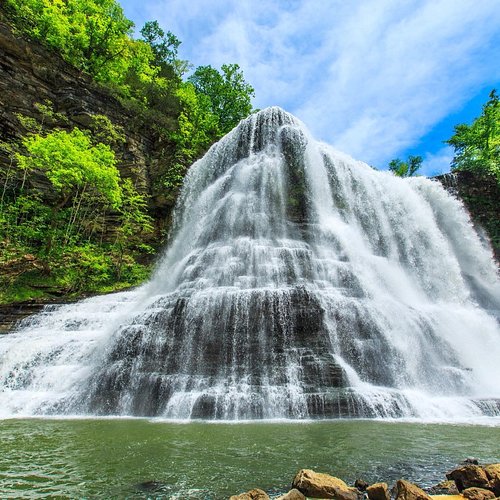
4. Burgess Falls
Burgess Falls is a series of cascades ending in a dramatic 136-foot drop. The falls are wide and powerful, with mist rising from the gorge. The park has a well-maintained trail with several viewing spots.
- Height: 136 feet
- Location: Burgess Falls State Park, near Sparta
- Trail difficulty: Easy to moderate
- Accessibility: Trails to overlooks, no access to the base
Burgess Falls is ideal for families and beginner hikers. The upper falls are smaller, and the main falls are the highlight. One beginner mistake is trying to reach the base—this is not allowed, so enjoy the views from above.
5. Abrams Falls
Located in Great Smoky Mountains National Park, Abrams Falls is not the tallest, but it’s powerful and scenic. The falls drop 20 feet, but the heavy flow makes them impressive.
- Height: 20 feet
- Location: Cades Cove, Great Smoky Mountains
- Trail difficulty: Moderate (5-mile round trip)
- Accessibility: Well-marked trail
Abrams Falls is best known for the beautiful hike through the forest. The trail follows Abrams Creek, with wildflowers and wildlife. Many beginners miss the fact that swimming is dangerous here—the pool is deep and currents are strong.
6. Laurel Falls
Laurel Falls is one of the most accessible waterfalls in the Smokies. It drops 80 feet over two sections and is popular for its paved trail.
- Height: 80 feet
- Location: Great Smoky Mountains National Park, near Sugarlands
- Trail difficulty: Easy (paved)
- Accessibility: Wheelchair and stroller friendly
Laurel Falls is often crowded. Visit early or late for fewer people. The paved trail makes it great for families. The main insight: Most visitors only see the upper falls—walk a bit further for the best view of both sections.
7. Foster Falls
Foster Falls is a tall, narrow waterfall in the South Cumberland State Park. It drops 60 feet into a rocky pool, surrounded by cliffs popular for rock climbing.
- Height: 60 feet
- Location: South Cumberland State Park, near Tracy City
- Trail difficulty: Moderate to difficult
- Accessibility: Steep trail to the base
The hike to Foster Falls is short but steep. The area is known for wildflowers and birdwatching. Beginners sometimes miss the swimming hole below the falls—it’s deep and cold, perfect for summer.
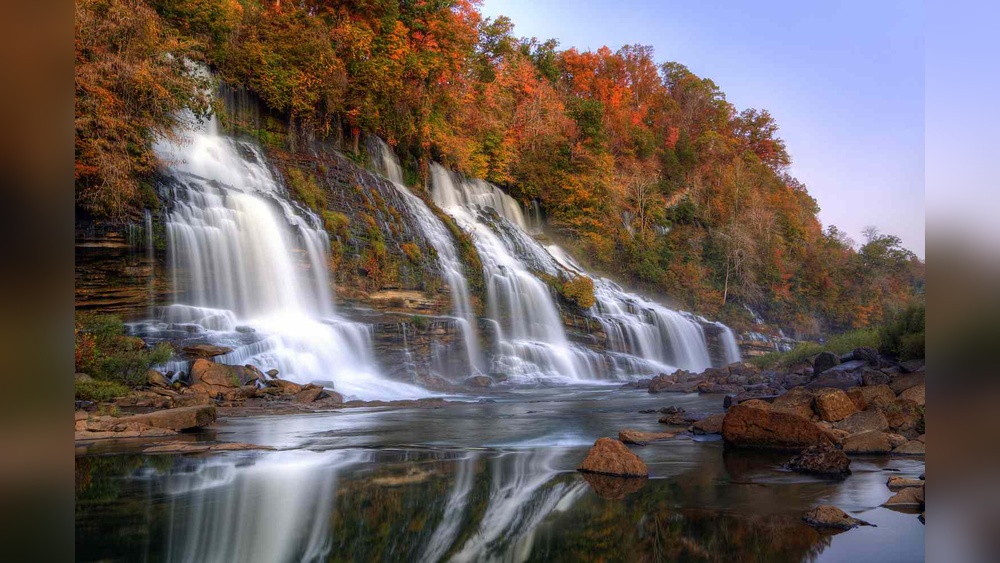
8. Twin Falls
Twin Falls is unique because it’s formed by water seeping through rocks, creating two side-by-side cascades. It’s located at Rock Island State Park, where the Caney Fork River meets the Collins River.
- Height: 80 feet (each)
- Location: Rock Island State Park, near Rock Island
- Trail difficulty: Easy (overlook), moderate (base)
- Accessibility: Trails to both overlook and base
The main insight: Twin Falls was created by a dam—water escapes through the limestone, forming the falls. Many beginners miss the multiple viewpoints; explore both the main overlook and the rocky riverbed.
9. Greeter Falls
Greeter Falls is a double waterfall, with upper and lower sections. The lower falls drop 50 feet into a scenic pool, while the upper falls are smaller.
- Height: 50 feet (lower)
- Location: Savage Gulf, South Cumberland State Park
- Trail difficulty: Moderate (rocky, stairs)
- Accessibility: Steep stairs, rocky trail
Greeter Falls is famous for its spiral staircase. The lower falls are best for swimming and photography. One tip: Visit after rain for the most dramatic flow, but watch for slippery rocks.
10. Cascades At Cane Creek Falls
Cane Creek Falls is a wide waterfall in Fall Creek Falls State Park. It drops 85 feet and is surrounded by lush forest. Nearby, Cane Creek Cascades offer gentle flows perfect for relaxing.
- Height: 85 feet (main falls), 20 feet (cascades)
- Location: Fall Creek Falls State Park
- Trail difficulty: Easy to moderate
- Accessibility: Overlooks, short hike to base
Many visitors skip the cascades—make time to see both. The area is great for picnics and swimming. Beginners often miss the connecting trails, which lead to hidden views.
11. Machine Falls
Machine Falls is hidden in Short Springs Natural Area. It drops 60 feet over a wide ledge, surrounded by ferns and moss.
- Height: 60 feet
- Location: Short Springs Natural Area, near Tullahoma
- Trail difficulty: Moderate (muddy, rocky)
- Accessibility: Narrow, natural trail
Machine Falls is best in spring or after rain. The hike is short but tricky. Many beginners miss the second smaller falls nearby—explore the area for secret spots.
12. Jackson Falls
Jackson Falls is a long, sliding waterfall in the Natchez Trace Parkway. It’s more of a cascade, dropping over rocks and forming shallow pools.
- Height: 40 feet
- Location: Natchez Trace Parkway, near Duck River
- Trail difficulty: Easy (paved)
- Accessibility: Short paved trail, steps to falls
Jackson Falls is perfect for families and picnics. The pools are shallow, ideal for wading. Many visitors miss the history—this area was a Native American trail and has signs explaining its past.
13. Piney Falls
Piney Falls is a two-tier waterfall hidden in Piney Falls State Natural Area. The upper falls are 80 feet, and the lower are 40 feet.
- Height: 80 feet (upper), 40 feet (lower)
- Location: Piney Falls State Natural Area, near Grandview
- Trail difficulty: Moderate (rooty, rocky)
- Accessibility: Natural trail, some steep sections
Piney Falls is a hidden gem. The hike takes you through old-growth forest. Beginners often miss the lower falls—look for side trails to explore both tiers.
14. Whiteoak Creek Falls
Whiteoak Creek Falls is a gentle cascade in Cherokee National Forest. It’s not tall, but the wide flow and peaceful setting make it special.
- Height: 20 feet
- Location: Cherokee National Forest, near Tellico Plains
- Trail difficulty: Easy
- Accessibility: Short trail, natural path
Whiteoak Creek Falls is best for relaxation. The area is quiet and uncrowded. Bring a picnic and enjoy the soothing sound.
15. Bald River Falls
Bald River Falls is a roadside waterfall in the Cherokee National Forest. It drops 90 feet and is famous for its easy access and scenic beauty.
- Height: 90 feet
- Location: Cherokee National Forest, near Tellico Plains
- Trail difficulty: None (roadside)
- Accessibility: View from bridge, optional trail to base
Bald River Falls is perfect for quick visits. Many beginners miss the optional trail to the base—if you have time, it’s worth the short walk.
16. Glen Falls
Glen Falls is a hidden waterfall near Chattanooga. It’s a multi-tier cascade flowing through a rocky gorge.
- Height: 30 feet (main drop)
- Location: Lookout Mountain, Chattanooga
- Trail difficulty: Moderate (rocky)
- Accessibility: Short, rocky trail
Glen Falls is less crowded than Ruby Falls. The hike is short but rugged. Beginners sometimes miss the upper tiers—explore the whole gorge for more falls.
17. Blue Hole Falls
Blue Hole Falls is a small but beautiful waterfall in Cherokee National Forest. It drops 15 feet into a deep blue pool.
- Height: 15 feet
- Location: Cherokee National Forest, near Elizabethton
- Trail difficulty: Easy
- Accessibility: Short trail, natural path
Blue Hole Falls is best for swimming and relaxing. The pool is clear and cold. Bring water shoes for slippery rocks.
18. Sill Branch Falls
Sill Branch Falls is a thin waterfall in Cherokee National Forest. It drops 30 feet through a mossy forest.
- Height: 30 feet
- Location: Cherokee National Forest, near Greeneville
- Trail difficulty: Easy
- Accessibility: Short, easy trail
Sill Branch Falls is best in spring. The area is quiet, with wildflowers and birds. Beginners often miss the second smaller cascade upstream.
19. Virgin Falls
Virgin Falls is a unique waterfall that disappears underground. Water flows out of a cave, drops 110 feet, and vanishes into another cave below.
- Height: 110 feet
- Location: Virgin Falls State Natural Area, near Sparta
- Trail difficulty: Difficult (8-mile round trip)
- Accessibility: Natural, rugged trail
Virgin Falls is a challenging hike, but the payoff is huge. The area has several caves and smaller waterfalls. Many beginners miss the need for planning—bring plenty of water, snacks, and start early.
20. Ramsey Cascades
Ramsey Cascades is the tallest waterfall in Great Smoky Mountains National Park. It drops 100 feet over rocks, creating a beautiful multi-tier cascade.
- Height: 100 feet
- Location: Great Smoky Mountains National Park, near Greenbrier
- Trail difficulty: Difficult (8-mile round trip)
- Accessibility: Rugged mountain trail
Ramsey Cascades is a tough hike, but the scenery is incredible. The trail passes old-growth forest, and the falls are stunning. Beginners often miss the warning: Do not climb the rocks—serious injuries have occurred.

Waterfall Comparison: Height, Accessibility, Difficulty
To help you choose which waterfalls to visit, here’s a comparison of the main features:
| Waterfall | Height (feet) | Accessibility | Trail Difficulty |
|---|---|---|---|
| Fall Creek Falls | 256 | Overlook, steep trail | Easy to moderate |
| Ruby Falls | 145 | Guided cave tour | Easy |
| Virgin Falls | 110 | Natural trail | Difficult |
| Bald River Falls | 90 | Roadside, optional trail | Easy |
| Ramsey Cascades | 100 | Mountain trail | Difficult |
Which Waterfalls Are Best For Families?
Not all waterfalls are suitable for young children or older adults. Here’s a quick guide to the most family-friendly falls:
| Waterfall | Trail Type | Best For |
|---|---|---|
| Laurel Falls | Paved | Strollers, wheelchairs |
| Bald River Falls | Roadside | Quick visits |
| Jackson Falls | Paved | Young kids |
| Blue Hole Falls | Short natural trail | Swimming |
| Burgess Falls | Easy trail | Viewpoints |
Planning Your Waterfall Adventure
Before you head out to explore Tennessee’s waterfalls, here are some practical tips:
- Check conditions: Water flow changes with the seasons. Spring and early summer are best for big flows.
- Bring water shoes: Rocks are slippery, especially near swimming holes.
- Pack light: For longer hikes, carry water, snacks, and a first aid kit.
- Permits: Some areas require permits for swimming or hiking in gorges. Check before you go.
- Weather: Thunderstorms can cause flash floods. Always check forecasts.
One insight beginners miss: Cell service is often limited in parks. Download maps or bring paper guides. Also, always let someone know your plans for longer hikes.
Hidden Waterfalls And Secret Spots
Besides the famous falls, Tennessee has many hidden gems. Some require off-trail hiking or local knowledge. For example:
- Lost Creek Falls: Near Sparta, inside a cave.
- Hemlock Falls: In Big South Fork, a quiet and wild spot.
- Bee Branch Falls: Near Tracy City, a small but scenic waterfall.
These are less crowded and offer a deeper connection with nature. The best way to find hidden waterfalls is to ask park rangers or locals.

Waterfall Safety And Conservation
Waterfalls are beautiful, but they can be dangerous. Every year, accidents happen due to slippery rocks, strong currents, or falls from heights. Here’s how to stay safe:
- Never climb rocks: Wet rocks are very slippery.
- Supervise children: Keep kids away from cliff edges.
- Respect signs: If access is restricted, it’s for your safety.
- Leave no trace: Take out all trash and avoid disturbing plants.
Tennessee’s waterfalls are also important for wildlife. Many are home to rare plants and animals. Protecting these areas keeps them beautiful for future generations. For more information, visit the Tennessee Department of Environment and Conservation.
Frequently Asked Questions
How Many Waterfalls Are In Tennessee?
There are more than 600 documented waterfalls in Tennessee. Many are in state parks or national forests, while others are hidden and require local knowledge to find.
Can You Swim At Tennessee Waterfalls?
Swimming is allowed at some waterfalls, like Cummins Falls, Blue Hole Falls, and Greeter Falls. Always check local rules and water conditions. Some pools have strong currents or sudden drop-offs.
What Is The Tallest Waterfall In Tennessee?
The tallest waterfall is Fall Creek Falls, which drops 256 feet. It’s located in Fall Creek Falls State Park and is a favorite for hikers and photographers.
Are Any Waterfalls Wheelchair Accessible?
Yes, several waterfalls have paved trails or roadside access. Laurel Falls (Great Smoky Mountains), Bald River Falls (Cherokee National Forest), and Jackson Falls (Natchez Trace Parkway) are all accessible for wheelchairs or strollers.
When Is The Best Time To Visit Waterfalls In Tennessee?
The best time is spring and early summer when water flow is strongest. Fall offers beautiful colors, but water levels may be lower. Avoid winter if you want big flows, as many falls freeze or slow down.
Exploring the best waterfalls in Tennessee is a journey through wild landscapes, rich history, and hidden beauty. Whether you seek adventure or a peaceful escape, there’s a waterfall waiting for you. Plan carefully, respect nature, and enjoy the magic that only Tennessee can offer.